What if the most dangerous DeFi transaction is not the one you sign, but the permission you granted days earlier? For many US users, wallet security is still framed around checking a transaction at the moment it appears. That is necessary, but incomplete. A token approval can remain active after a swap, lending deposit, bridge transfer, or liquidity interaction has finished. The practical risk is therefore not limited to one transaction: it can persist as an authorization relationship between a smart contract and your funds.
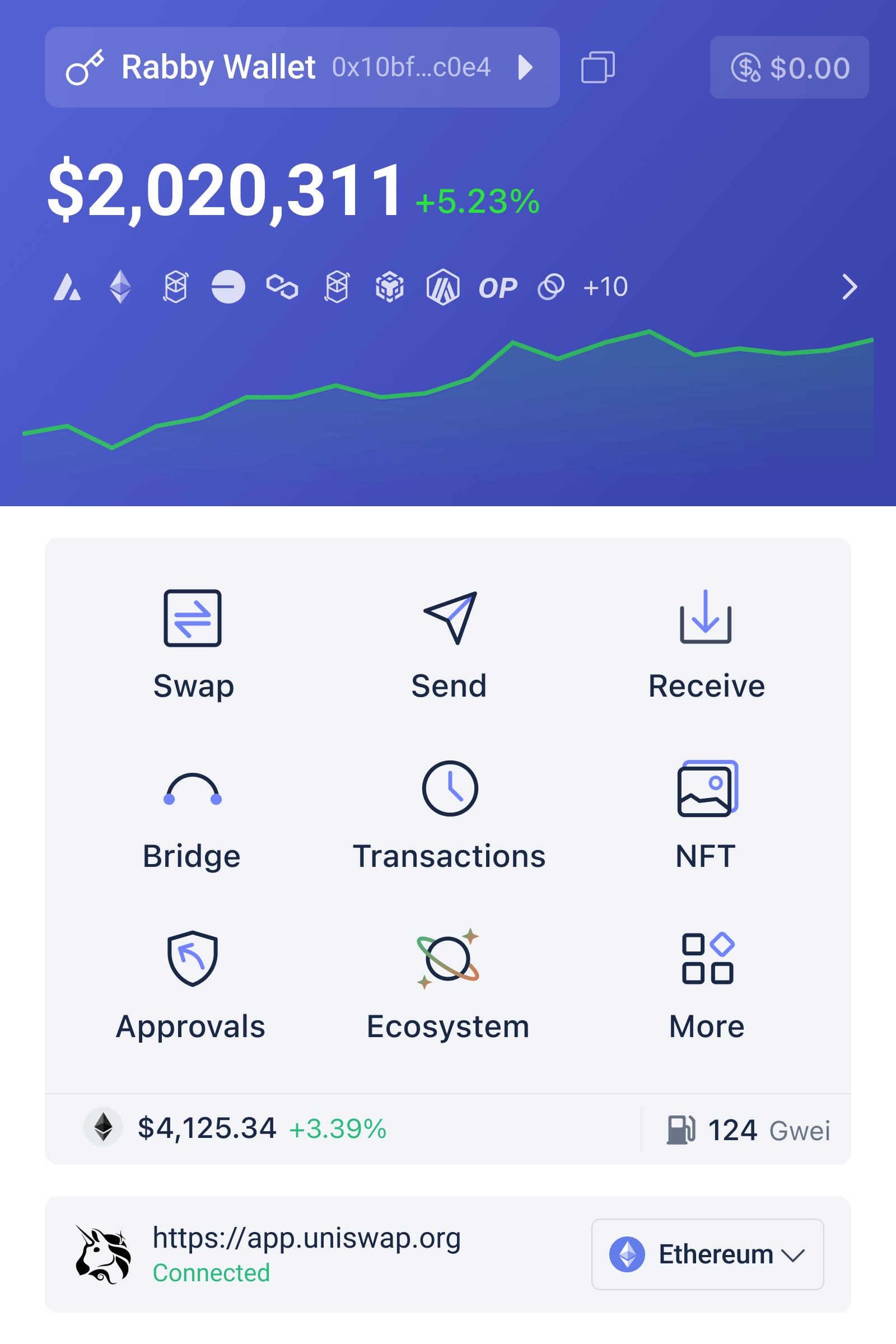
This is where token approval management and transaction simulation belong in the same conversation. Approval management asks, “Which contracts can move my tokens, and should they still be able to?” Simulation asks, “What is this proposed transaction likely to do if it executes?” Rabby Wallet brings these questions closer to the signing process through a browser-extension workflow designed for users interacting with decentralized applications. Its value is not that it eliminates smart-contract risk. Rather, it can help turn opaque signing decisions into a more structured review.
The hidden lifecycle of a DeFi permission
Token approvals are often misunderstood as transfers. They are not. In a common token standard, a user authorizes a specific spender address to move up to a specified amount of a particular token from the user’s account. The approval is recorded by the token contract. Later, another contract may use that allowance through a transfer function, subject to the rules encoded in the token and the approved spender.
This distinction creates a two-stage interaction. First, the user approves a contract, often through a separate transaction. Second, the user performs the intended action, such as swapping one asset for another. The approval may be set to the exact amount needed, or it may be set to a very large amount so that future transactions do not require another approval. The second option is convenient and can reduce repeated network fees, but it also increases the potential exposure if the spender is compromised, malicious, incorrectly configured, or used by a deceptive application.
A useful mental model is to treat an approval as a standing power of attorney for a narrowly defined asset relationship. It is not a permanent loss of ownership, and it does not automatically mean that funds have been stolen. But it is an active capability. If the allowance remains larger than necessary, the wallet’s future risk depends partly on the behavior and security of the approved contract.
That is why approval management is not merely housekeeping. It is a form of access control. A user who regularly interacts with decentralized exchanges, lending markets, restaking protocols, bridges, and newer applications can accumulate permissions across several networks. The visible balance in a wallet may look unchanged while the permission surface becomes broader and harder to remember.
What transaction simulation can—and cannot—show
Transaction simulation attempts to estimate the result of a proposed transaction before it is broadcast. In practical terms, a wallet or supporting service evaluates the transaction against a representation of the current blockchain state and reports expected effects. These may include token transfers, approvals, contract calls, balance changes, or a likely failure condition. For a user, the important benefit is interpretive: instead of seeing only a contract address and encoded data, the signing screen may provide a clearer account of what the call appears to do.
Simulation is especially useful for detecting a mismatch between intention and execution. A user may think they are claiming a reward while the transaction attempts to approve a spender. They may expect to deposit one token but see an unexpected asset leaving the account. They may be interacting with a familiar-looking application whose requested action does not fit the stated purpose. These are not hypothetical categories of confusion; they arise because smart-contract calls are technical instructions, while wallet decisions are usually made in the language of actions such as “swap,” “stake,” or “mint.”
Rabby’s transaction-review approach is therefore most helpful when it is treated as a translation layer, not an oracle. It can surface expected asset movements and permission changes before the user signs. For readers who want to install the browser extension, using the official source is an important first step; a careful rabby extension download process should still include checking the publisher, the extension domain, and the permissions requested by the browser.
The limitation is fundamental: a simulation is conditional on the state and assumptions available when it is run. Blockchain state can change between simulation and confirmation. Prices can move, liquidity can shift, a contract can depend on external data, or a transaction can behave differently because of ordering and timing. Some contracts also contain logic that is difficult to represent fully in a simple user-facing summary. A successful simulation does not prove that the application is trustworthy, the code is audited, or the economic outcome is desirable.
There is another boundary condition that matters for approvals. A simulation of the current transaction may correctly show that an approval is being created, while saying little about how that allowance could be used later. The future call may occur in a different market condition or through a contract function the user never considers. In other words, simulation is strongest at answering, “What does this transaction appear to do now?” Approval management answers the longer-horizon question, “What authority will remain after it is complete?”
Rabby compared with other ways to control approval risk
There is no single best method for every DeFi user. Rabby’s integrated review experience is one approach, but it should be compared with alternatives rather than treated as a complete security system.
Wallet-level review and simulation
The main advantage of an integrated wallet is timing. The user sees a warning or transaction interpretation at the point of signing, when the decision is still reversible. This reduces the need to translate raw contract data independently and can make unfamiliar interactions easier to question. It is particularly useful for active users who move across multiple decentralized applications and networks.
The trade-off is reliance on interpretation. A wallet interface may summarize a complex call in a way that is necessarily incomplete. A reassuring display can encourage overconfidence, especially when the user recognizes the application but has not checked the contract address, domain, or broader protocol risk. The best use of simulation is as a reason to pause and investigate, not as a substitute for judgment.
Manual approval revocation tools
Dedicated approval dashboards and block-explorer tools can provide a more direct inventory of allowances. They are useful when a user wants to review older permissions, identify large allowances, or revoke access that is no longer needed. This retrospective view is something a signing prompt cannot fully provide.
However, revocation normally requires another on-chain transaction and therefore may involve network fees. It can also be confusing when the same protocol uses several spender contracts or when approvals exist on several chains. A user may revoke one allowance while overlooking another related permission. Manual tools provide control, but they demand more procedural discipline and technical attention.
Hardware wallets and transaction policies
A hardware wallet strengthens key isolation by keeping the private key in a dedicated device. This is a meaningful defense against certain forms of malware and unauthorized key extraction. It can be a sensible choice for long-term holdings or larger balances.
Yet key isolation does not make a signed approval safe. A hardware wallet can protect the signing key while still allowing the owner to authorize an excessive allowance or an unwanted contract call. It addresses one part of the threat model—key compromise—but not the separate problem of informed authorization. Hardware security and approval hygiene work together; neither replaces the other.
A practical framework for safer signing
Before approving a token, first identify the purpose. Is the allowance required for a one-time swap, or is it intended for repeated use? The answer affects whether an exact or limited allowance is preferable to a broad one. Lower allowances may require more transactions later, but they reduce the amount a spender could potentially move under the approval.
Next, distinguish the token from the spender. Users often focus on the asset being used and overlook the contract receiving permission. Confirm that the spender is the contract expected by the application, and be cautious when a familiar brand is paired with an unfamiliar domain or address. A professional interface is not proof of a legitimate contract.
Then examine the simulated outcome. Look for assets leaving the wallet, new permissions being created, unexpected recipients, and actions that do not match the stated task. If the transaction fails in simulation, do not automatically retry with altered settings. Failure can reflect insufficient balance or an application error, but it can also indicate that the call is not behaving as expected.
Finally, review old approvals periodically. A sensible routine is to examine allowances after abandoning a protocol, after using a one-time application, and whenever a wallet has interacted with many contracts. Revoking every approval indiscriminately is not always efficient, particularly for users who repeatedly use a trusted protocol, but leaving every permission untouched is not a neutral choice either. The correct balance depends on convenience, fee costs, asset value, and trust in the spender.
For US users, network fees and tax recordkeeping add practical considerations. Revoking an allowance is generally an on-chain action, so it may create a fee and a transaction record that should be retained with other digital-asset records. The tax treatment of specific transactions depends on facts and applicable law, so wallet hygiene should not be confused with tax advice. The broader point is simple: security controls have operational costs, and a realistic process accounts for them rather than pretending that every permission can be managed at zero cost.
What to watch as wallet security evolves
If wallet interfaces improve, the most useful direction is not simply more warnings. It is better context. A warning that says “high risk” without explaining whether the concern is an unlimited approval, an unfamiliar spender, a failed simulation, or a contract interaction with unusual asset movement may produce alert fatigue. Users learn to dismiss warnings when too many appear without clear distinctions.
A stronger model would combine transaction simulation with an approval inventory, contract identity signals, and reminders about permissions that remain active after the immediate action. Even then, uncertainty would remain. DeFi contracts can be upgradeable, governance can change parameters, and a previously trusted protocol can acquire new dependencies. These conditions mean that security is not a one-time installation decision; it is an ongoing process of checking authority, code context, and intended outcomes.
Frequently asked questions
Does transaction simulation guarantee that a DeFi transaction is safe?
No. Simulation can clarify the likely effects of a transaction and expose inconsistencies between the requested action and the user’s intent. It cannot guarantee that the contract is honest, that the simulation captures every external dependency, or that conditions will remain unchanged until confirmation.
Should I revoke every token approval after using a protocol?
Not necessarily. Revocation reduces the authority that remains with a spender, but it costs an additional transaction and may be inconvenient for protocols used frequently. Consider revoking permissions that are no longer needed, involve unfamiliar contracts, or cover valuable assets with broad allowances. Keep the decision proportional to the exposure.
Does using Rabby Wallet remove the need to verify a DeFi application?
No. A wallet can improve transaction visibility and help identify suspicious approval or transfer patterns, but users should still verify the application’s domain, contract details, requested permissions, and intended function. Wallet assistance is a layer of defense, not a replacement for verification.
The most durable lesson is that signing is not the end of a DeFi decision. It may create a permission that outlives the transaction by weeks, months, or longer. Transaction simulation helps inspect the immediate event; approval management governs the authority left behind. Used together—and tempered by skepticism about what any interface can prove—they give DeFi users a more accurate way to think about wallet safety: not as avoiding every interaction, but as granting only the access that the intended action actually requires.